2.8.20

Tracing Apps: Precaution and Paranoia


It's a little over a year since I last blogged anything.  Partly that's because I had other things on my mind, and nothing struck me as being the kind of topic about which I had much to say.  And then Covid-19 came along, and I still didn't have anything to say.
Could prior exposure to common cold viruses affect the severity of ...
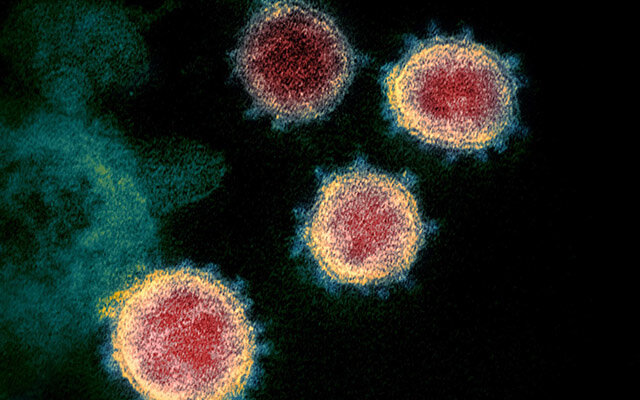
Gratuitous virus image!  Yay!
I think that a lot of people don't have much to say about it; but that doesn't seem to have stopped them saying it anyway.  There's been a lot of nonsense.  And there's also been a lot of stuff that isn't nonsense, but that is nonetheless trivial, as people find an excuse to make their rather quotidian thoughts about consent or resource allocation or whatever relevant by sticking "... in the Time of Coronavirus" at the end of the title and bunging it off to a journal.  Hey-ho.  The REF's coming.  What do you expect?

The upshot is that I've been ignoring most of the CV-19 stuff; but every now and again, something catches my eye - such as this piece by Deena Davis on the Hastings Center blog: "Before We Turn to Digital Contact Tracing for Covid, Remember Surveillance in the Sixties", the conclusion of which is that "for me, digital contact tracing [through phone apps] is a bridge too far".

Why would this be?  The concern articulated has to do with the misuse of data.  Once you're being traced, who knows what'll happen to the data generated?  There are precedents for things happening with it that one might not welcome:
Do you remember when we discovered that Uber’s passenger app not only traced you to your destination, but continued to trace where you went after you exited the car?
And so the worry is that by installing a tracing app, one would potentially be handing over vast amounts of information to the government, which might use it for sinister ends.  For example, it might allow information to be gathered about immigration lawyers having met clients - presumably, not something that one would want to see.  Correspondingly, we might see other instances of governments prying into personal lives.  And this is at the root of the reason not to install the app.
In order to place such an app on my phone I would have to believe at least the following things: that the promised anonymity would be respected, that the government would not get hold of it, and that it would not be used to trace contacts for other reasons, e.g., to discover an immigration lawyer’s clients.
[W]e would need important safeguards against mission creep, whereby the surveillance app did not de-activate just because the pandemic was over. Perhaps the government discovers a new use for it; perhaps we kind of get used to it, the way we are used to the idea that our E-ZPass keeps a record of every toll booth we have gone through and our grocery store loyalty card keeps a record of the foods we buy.  [Ryan] Calo [has] noted that “clear, explicit rules are critical,” but what point are rules if the government clandestinely subverts them?
Well, OK.  But it's one thing to raise concerns about what a government might do nefariously with data gathered through a tracing app - quite another to take those concerns as settling matters.  For one thing, we have to ask ourselves whether governments actually would do that.  Perhaps they would.  Perhaps not.  It's notable that Davis doesn't really go beyond the "But what if..." stage of argument.  But that's a really cheap move.  We need to know more about the likelihood of this or that outcome.  ("But what if my writing this blog inspires a white supremacist murder?"  Well, I suppose there is a non-zero chance that it could, somehow.  But it's not likely.  It's not a reason not to write it.  The example is hyperbolic, but I hope it gets the point across.)

Let's stick with the immigration lawyer example.  It strikes me that there's a number of problems with this.  The first is that people who are concerned about deportation are likely to be among those least likely to download any kind of track-and-trace app to begin with.  And so - assuming I've understood the technology correctly and it'll be required for two phones to have it installed and active for it to work - there won't be a particular concern there.  Even if I've misunderstood the technology, anyone who is particularly worried would be able simply to turn their phone off for a bit, or leave it at home, or something like that.  This does undermine the efficacy of the app, for sure - and I'll come back to that point in a moment.  (The qualifier would have to do with instances in which apps are installed automatically, like U2 albums.  But if that's the case, there's nothing special about CV-19 apps, because presumably governments could install such apps anyway, and much more surreptitiously.)

In the meantime, it's also worth noting that there are rules about legal privilege that militate against the government making use of data gathered from such an app.  And while I'm not sure how powerful this point is - it's not obvious that there'd be a way to distinguish reliably between a lawyer and a client meeting in the office (which would be privileged) and their meeting in Starbuck's half an hour later (which wouldn't), the principle applies; and, of course, it people are bumping into each other in the coffee shop, then this is a "civilian" interaction anyway, so whether people are immigrants or lawyers would be neither here nor there.  They could easily be just people who happened to be close by at a given point.

"Ah, yes," the response might go, "It's true that the government would be in trouble if it subverted the rules on legal privilege; but so what?  By then it's too late.  And as Davis says, what point are rules if the government subverts them?"  And, superficially, this has a certain attraction as an argument - except for two considerations.  First, it militates against having rules on anything: if you've decided that they won't stop nefarious behaviour, you might as well not have them; and if you don't have the rules, then there's nothing about which to complain.  sequitur, second, that though the rules might not stop people determined to be bastards, their being there does give you a way to resist that bastardy.  That's an important point of principle.  So, for example, if you're an immigrant who's facing deportation because of the rule-breaking way an app was used, you'd have grounds for that deportation decision to be overturned or suspended, because there was (in effect) a due process violation.  Now, admittedly, it might be that when push comes to shove, this makes no practical difference.  But, as indicated, the point of principle would stand, and at the very least it would improve the prospects of other immigrants in a similar situation.

But a point that's more important than any of that is, I think, this: that the reason for having the app is important.  Davis doesn't say much about that, concentrating instead on the reasons to be suspicious of it.  But the examples she offers are examples of institutions using data for what we can take to be bad reasons.  It is prima facie undesirable for Uber to scrape data for commercial reasons.  It is prima facie undesirable for governments to try to sidestep legal norms when it comes to things like immigration (or anything else).  There does not seem to be a particularly compelling, or even good - by which I mean morally defensible - reason for either of those things to happen.

An app for exposure to CV-19 is different.  The underlying reason for that seems to be prima facie decent.  So even if there are reasons con as well, matters are different from how they appear in the examples offered.  We can't make sense of the desirability or otherwise of installing the app unless we give a full account of the reasons pro and con.  It might even be that we find the reasons for a CV-19 app unconvincing all told.  Nevertheless, there is a qualitative difference between it and the other examples Davis offers, precisely because there is a weighty moral reason for a CV-19 app that there isn't in other cases.

And this is where I go back to the point about lawyers switching off their phones for a while.  There is a reason not to.  But maybe, if the government is untrustworthy enough, there is a reason to do that.

If there are no particularly good reasons to install the app, then don't install it.  If the positive reasons not to are great, then don't install it.  But slightly vague appeals to the risk of state surveillance don't seem to me to carry much weight.


2.7.19

Feeling my Age

My last post here was a reply to a paper by Joona Räsänen in the Journal of Medical Ethics that had argued that there was a case for allowing people to change their legal ages.  I... wasn't convinced.  And, encouraged by people on Facebook, I submitted a slightly tweaked version of the reply to the JME; it's now published, and available here.  I was not the only critic - and it's notable that the criticisms that have been published raise very similar points.  For his part, Räsänen has provided a reply to some of the criticisms.

Readers: it's not convincing.  I'll be brief.

"Iain Brassington and William Simkulet both raise the following objection against legal age change," he says, paraphrasing us thus:
Ageism is not a reason to allow age change but a reason to require that age is not asked while recruiting employees.  Age change should not, therefore, be allowed because there is an easier way to solve the problem of discrimination: restricting access to one’s birthdate.
OK.  That seems like a reasonable précis, and it attracts a twofold response from him.  First, if recruiters are allowed to ask but applicants allowed to withhold age, that is a sign that there is something to hide, and so it would not solve the problem.  This is possibly correct, as far as it goes - but that's a symptom of ageism, and so it's not quite clear where we should go next.

The second option, Räsänen continues,
is to prohibit everyone from revealing their ages in job applications to ensure that no-one can be discriminated against because of age.
(This is the position towards which I lean, by the way.)  But, he objects,
[t]his option might reduce discrimination but the cost is too high. Age is an important part of people’s identities. If we do not allow people to reveal their ages to others, we are committing a serious moral wrong because we are restricting their freedom on something that matters to them greatly.
I have real problems with this.  Bluntly, I don't know what it means, and I can't even speculate about what it's supposed to mean.  What are we supposed to make about a claim that "age is an important part of people's identities"?  What work is being done by "identity"?  Indeed, is any work being done by it at all?  In what sense is age important to whatever it is that "identity" is supposed to mean?

31.3.19

What a Drag it is Getting Old

There is an ongoing argument across social media and some areas of academia that sometimes gets very, very nasty indeed, and I'm not going to dip my toes into it here, or even name it.  If you know what it is, you know, and if you don't, it won't matter much to what I'm about to consider.  One of the areas of dispute has to do with the intersection between "identity" and - for want of a better phrase - material reality (or facticity, if you're so inclined).  A lot of people take it as clear that the two are very different; hence one cannot identify or stipulate certain facts about the world into being other than they are.  Age is a paradigmatic example of that.  Having been on this planet a shade over 42 years, I can't be anything other than 42, for the simple reason that that's what I am.

Not so fast, says Joona Räsänen in the JME, in what appears not actually to be meant as a reductio ad absurdum.  There is, he thinks, a case to be made for legally changing one's age.

Unfortunately, as we'll see, it's not a very strong case.  (If I'm so sure of my position, why not write it up as a paper in its own right?  Well, because I don't think it takes long enough to dismiss the argument to generate a paper, even for a journal with as low a word limit as the JME.)

11.12.18

Parsi Time!

Dotted around Mumbai, there's quite a few Parsi buildings; there's a monument to an influential member of the community just around the block from my hotel that has inscriptions in actual cuneiform, and I've stumbled across three or four Zoroastrian Fire Temples within a very few minutes walk.  A couple of miles away, on Malabar Hill, the Tower of Silence is hidden discreetly behind some trees; I'm not sure whether the kites circling above were taking advantage of the thermals, or whether they knew something that I didn't.  Entry to the Temples is forbidden to non-Parsis.  (This is, incidentally, different from Iran: we had no trouble visiting a Fire Temple in, if I remember rightly, Yazd.)  But if I can't get into Parsi places of worship, I can do the next best thing, which is to patronise their restaurants.

The Britannia is a few blocks east of my hotel, and it's recommended by Lonely Planet, so I pootled across there the other day with dinner in mind, only to discover that it's open only from noon until 4.  So I went there for lunch today.

The restaurant is in a building that would charitably be described as dilapidated.  Plaster has fallen from the ceiling in a couple of places, and the paint is peeling from it in many others.  The chandelier is the filthiest thing I have seen in a long time: I can't imagine that it was supposed to be grey when it was fitted.  On the walls, there are the flags of the UK, India, and Iran; these are close to pictures of Zoroaster, Gandhi, and the Queen, and of Bombay-as-was and Persepolis in the 1930s.  There's also a life-size carboard cutout of William and Kate.  The waiters are all elderly men in bowties.

The place is impossible not to love.

The waiter who brought me the menu was keen to talk me through it; he drew my attention to the chicken berry pulav.  I noted that people on the tables all around me seemed to be eating huge plates of zereshk polow, so I asked if that was what it was.  (It looked really good, but I had my heart set on the mutton dansak.)  Clearly, I'd given myself away as a Persephile; when I'd finished eating, and had paid the bill, the waiter invited me to stay sitting because he wanted me to meet the proprietor.

This is the proprietor.  We exchanged a few words in Persian before my memory gave out on me entirely, and then we switched to English.  (One side-effect of this is that it's brought home to me just how much I want to get that language nailed down; it really does bother me that I've not managed it yet.  I've not even had a lesson since about May.  So I shall have to get in touch with Mozghan or Nafiseh, and make a point of learning the vocabulary this time.)  He is a slightly stooping gentleman of advanced years, with a kind face and a very gentle handshake, and he told me a number of things, the credibility of which is somewhat variable.

The first was that he is 96 years old.  This I have no problem believing.  He looks well on it, though.  The second was that the world's oldest man died in Indonesia recently, aged 146.  This was reasonably widely reported, though whether I believe those reports is a different matter.  The third was that he fully intended to break that record.  I do believe that this is his intent; I cannot say whether the intent will be satisfied.  But he took such glee from the way he talked about breaking it that I really, really hope that he does manage the feat.  The fourth was that he hoped that I should live long enough to break his record, whatever that may turn out to be.  I am touched by the sentiment, but am not sure I share it.  An extra 104 years is a heck of a long time.

He told me also that he had a half-hour long meeting with the Duke and Duchess of Cornwall; since he has an A4 photo of the meeting, and is evidently very proud of it, I cannot but believe that.

But then he told me one thing that I cannot believe, but that again he delivered with amazing charm.  He couched it as a jokey sort of request: when I get back to England, or Britain, or the British Isles, or the United Kingdom ("So many names for one country!"), and the next time I see the Queen, could I tell her that she would be more than welcome to move to India to (re)take the crown there?  A new Buckingham Palace could be built, and accommodation could also be made for George, Charlotte, and Louis.

I'm not sure if this was meant as something that Indians en bloc, or the people of Mumbai, or the Parsis, or he alone wanted to see.  It seemed rude to press for more details.  I told him I'd pass on the message if I ever got the chance - though I don't think I will.  Get the chance, I mean: I will pass it on should I bump into her in Tesco.  If, however, somebody reading this does happen to meet the Queen, could they do the honours?  There's a nonagenarian restaurateur who'd be thrilled.


Oh, and I'm definitely going back there for lunch tomorrow.

.فردا, من ناهار می خورم آنجا
(I think that's roughly how to say it...)

13.11.18

Academics Anonymous

The launch of a new academic journal doesn't normally attract much attention; but the launch of a journal that promises anonymity to authors who need protection, who who feel that they need it, because of the nature of their ideas has caused a bit of a stir.

I don't know most of the people involved; but I know some, and others are friends of friends.  No particular alarm bells are ringing.  (Francesca Minerva's name has been mentioned.  I'm not bessie mates with her, but I do know her professionally; she's whip-smart, as well as being a nice person.  On the other hand, she does have form when it comes to pressing for anonymity, and I articulated my concerns about her position at the other place... crikey.  Five years ago.)

I also know, and know of, a fair number of people who have faced appalling treatment for holding certain intellectual positions or advancing particular arguments.  Sometimes, those are positions and arguments that appear in peer-reviewed journals; I would be curious to know how much of the treatment comes from people who've read carefully the peer-reviewed papers about which they're protesting, as opposed to people who are outraged by proxy.  (Francesca wrote what I jokingly call The Paper Of Which We Do Not Speak and faced all kinds of abuse for it - much of it, I think, by proxy, after the Daily Mail and then Glenn Beck got hold of it.)  Sometimes they aren't positions articulated in journals; several academics that I know and respect have found themselves attacked for what seems to me to be the crime of being insufficiently woke on questions of gender and the law.

Either way, more often than not, as far as I can see, this treatment has come not from universities, but from civil - no: uncivil - society.  Universities have, at least sometimes, done the right thing in sticking up for academics.  This matters, because people receiving abuse for their positions are obviously people who have not been silenced and who - presumably - count as evidence against the case for anonymity.  Still, I can see how people might think that anonymity would be desirable, at least sometimes.  And there are anecdotes about people's academic careers suffering because of their intellectual commitments.

And yet I'm unconvinced by this journal, and for a number of reasons.


9.11.18

In it for the Money

Something I'd never realised about my job was that I've been missing out on the chance to turn into a cash-machine.

In the grand scheme of things, academic pay isn't bad... once you get established.  The problem is that getting established isn't easy: I was 30 before I'd ever earned enough to pay income tax, and it's got harder since then to get a foot on the career ladder.  Taking into account the level of student debt that new entrants'll've accrued, which are far higher than people of my cohort would have had, and the way that they're expected to have a portfolio of publications even before getting a job, I'm glad I'm not looking for a first job now.  Still, the point stands that, once you've got a foot on the ladder, the average academic salary is comfortably more than the average salary.  All the same: a bit more income on the side would never be a bad thing, would it?

Considerablay richer than yeow.
Daniel Sokol, writing on the JME blog, thinks that it should be possible to monetise medical ethics, and offers advice on how to do so.  Well, he might be offering advice.  He might simply be looking to tell the world that he's doing nicely, and tacking an advert for his book on at the end.  It's hard to know.  Anyway: he's got some suggestions.

I'm not going to rehearse what they are point by point, because that'd be tedious.  The gist is that there're thousands of pounds to be made if you happen to make the right moves.  But one wonders quite what planet he's on with the figures he quotes, and about the character that'd be required to make the moves that he recommends.

5.11.18

Edwards, Fuller and the Rule of Law

Phil Edwards posted a short essay on The Conversation a few days ago in which he articulates his concerns with the Counter-Terrorism and Border Security Bill, the latest piece of counter-terrorism legislation to be brought before Parliament.  This Bill, says Phil, was "justified" by Sajid Javid "as a way of ensuring that 'the police have the powers they need to protect us'".  Now, my hackles are already raised here because of the use of the word "justified" - Javid didn't justify the legislation thus, though he may well have attempted to do so.  To say that he justified it is to concede that his attempt was successful, and since Phil goes on to imply that the thinks that the Bill is open to serious criticism, Javid can't have justified it.  I know that a lot of lawyers use "justify" to mean "attempt to justify", or "defend", as well as... well "justify", but I do think that the distinction is important and worth maintaining.  I think that the lawyer's use of the word opens the door to a whole load of trouble.  After all, if you can't distinguish attempt from success in any enterprise, you're probably screwed.

But I digress... already.  Despite being less than a thousand words long, there's a lot crammed into Phil's piece.  Distilling the essence of the essay, I think that we'd end up with something like this:
  1. There are certain "precursor" activities that, though not terroristic in themselves, might nevertheless be subject to prosecution on the basis that they are precursors to terrorist activity.
  2. Laws that criminalise precursor activities may be worthy of our disapprobation in their own right.
  3. Such laws may be worthy of "second order" disapprobation, on the basis that they are (likely to be) inconsistently applied.
  4. This is because inconsistent application of a law is a violation of the Rule of Law.
  5. An appeal to Lon Fuller can help us understand the move from (3) to (4).
I want to concentrate here on one aspect - the final one - though there'll be the original shoutout to others.  But, in the spirit of being as candid as possible about my commitments, I suppose it's worth laying out a couple of responses to the parts Phil's argument that I'm going to bracket for now.  Thus, for example, I don't have any problem in principle with the idea of precursor crimes.  There're times when it seems to me perfectly proper to intervene to prevent a risk being realised.  While it's true that there's always a chance that a person planning to commit a crime might stop short of doing so even though fully prepared, it seems reasonable for the law to be concerned about that preparation.  Now, quite how prepared one would have to be in order to be the proper object of legal concern is a further question, and I'm not sure how the law ought to draw the line here.  I'm also not sure that it necessarily has to; setting out too rigid a list of criteria might force juries to convict the plain fantasist, and to acquit the genuine danger, simply because of the way the law has been drafted.

With that said, it is likely that we ought to worry about inconsistent application.  Whether that worry can be soothed, granted the idea that it's desirable to avoid rigid criteria for prosecution and conviction is uncertain.  It might be that the price we pay for desirable flexibility is the risk of inconsistency.  Whether or not that's a price we should pay is not immediately obvious; it needs more in-depth consideration than I can give it here.  Maybe we have to pay attention to the distinction between apparent and actual inconsistency, on the understanding that instances of the former may not be instances of the latter.

One thing that would seem to make the price too high would be an erosion of the Rule of Law tout court.  A world in which nobody can be certain whether and how the law will respond to their actions is a world in which the Rule of Law seems not to obtain: rather, we'd have the Rule of Agents of Law, or Rule of Prosecutors, or Rule of Judges, or something like that.  And this is where Fuller comes in.