Showing posts with label Ethics. Show all posts

11.8.22

The Academic Merit of "What I Did on my Holidays"

There are no frequent or regular readers of this blog, because it is updated so infrequently and irregularly.  It takes a lot to get me to add anything.  Quite often, a longish thread on Twitter is as close as I get to blogging these days.  But sometimes, things need a bit more working-out.  Things such as this paper, "I am not Alone – We are all Alone: Using Masturbation as an Ethnographic Method in Research on Shota Subculture in Japan" by Karl Andersson, published in the journal Qualitative Research, which has attracted a fair bit of attention on social media in the past few days on the basis of a tweet from the Tory MP and culture warrior Neil O'Brien - a tweet that led a number of equal-but-opposite culture warriors to decide that since he'd condemned it, it must be worth defending (and then, at least sometimes, walking it back, as here and here; others have simply deleted their tweets in defence, presumably in the hope that we'll forget them.)

But Twitter is a notoriously more-heat-than-light sort of place, and so I decided to read the paper for myself, and to put myself in something like the position of a peer-reviewer.  Is the paper actually any good?  Does it have academic merit?

I don't think it does, and I'll explain why in a moment.  But first, a few things should be noted.

7.4.21

He's Done a Course

Back in my days editing the JME blog, we used to get the occasional unsolicited post sent to us.  Almost always, they went unpublished; this was overwhelmingly because they weren't very good.  The one person who did sometimes get his unsolicited work published was the ethicist-turned-barrister Daniel Sokol.  There was a number of reasons why we were a little more forgiving of him: he was someone we knew, and a reasonably well-known person in the field - he had a fairly regular column in the BMJ; his submissions, while sometimes a bit self-congratulatory, were often fairly inconsequential - but they were by the same token pretty harmless, so could tide us over during those periods when we had little to say of our own; and, finally, if we did reject his submissions, we could more or less guaratee that they'd appear on the BMJ's own blog anyway, so there wasn't much point our trying to act as gatekeeper.

A post by him appeared on the JME blog a few days ago, detailing the help he had been able to give a doctor, one Tarek Seda, who had found himself in professional trouble and facing a hearing from the Medical Practitioners' Tribunal Service in 2019.  This post purported to be a brief account by Dr Seda of how Sokol was tremendously helpful, andit was supplemented by an account by Sokol himself of how Sokol was... er... tremendously helpful.

Now, I do not know whose idea the post was - in the comments, Sokol writes that

[a]fter the outcome of the MPTS hearing, Dr Seda selflessly asked how he could help other doctors in a similar situation.   One suggestion was to write an article, giving a dual perspective on the process of ethics remediation: the doctor’s and the ethicist’s.   This blog is the product of that idea.

This tells us little about whose idea the post was, although I do have my suspicions - and I'll come back to that in a moment.  But it will not have escaped anyone's attention that the post as a whole does come across rather as an advertorial.  Evidence for this can be produced from the final sentence of the post proper, and the supplementary text that follows it:

2.8.20

Tracing Apps: Precaution and Paranoia


It's a little over a year since I last blogged anything.  Partly that's because I had other things on my mind, and nothing struck me as being the kind of topic about which I had much to say.  And then Covid-19 came along, and I still didn't have anything to say.

Could prior exposure to common cold viruses affect the severity of ...
Gratuitous virus image!  Yay!
I think that a lot of people don't have much to say about it; but that doesn't seem to have stopped them saying it anyway.  There's been a lot of nonsense.  And there's also been a lot of stuff that isn't nonsense, but that is nonetheless trivial, as people find an excuse to make their rather quotidian thoughts about consent or resource allocation or whatever relevant by sticking "... in the Time of Coronavirus" at the end of the title and bunging it off to a journal.  Hey-ho.  The REF's coming.  What do you expect?

The upshot is that I've been ignoring most of the CV-19 stuff; but every now and again, something catches my eye - such as this piece by Deena Davis on the Hastings Center blog: "Before We Turn to Digital Contact Tracing for Covid, Remember Surveillance in the Sixties", the conclusion of which is that "for me, digital contact tracing [through phone apps] is a bridge too far".

Why would this be?  The concern articulated has to do with the misuse of data.  Once you're being traced, who knows what'll happen to the data generated?  There are precedents for things happening with it that one might not welcome:
Do you remember when we discovered that Uber’s passenger app not only traced you to your destination, but continued to trace where you went after you exited the car?
And so the worry is that by installing a tracing app, one would potentially be handing over vast amounts of information to the government, which might use it for sinister ends.  For example, it might allow information to be gathered about immigration lawyers having met clients - presumably, not something that one would want to see.  Correspondingly, we might see other instances of governments prying into personal lives.  And this is at the root of the reason not to install the app.
In order to place such an app on my phone I would have to believe at least the following things: that the promised anonymity would be respected, that the government would not get hold of it, and that it would not be used to trace contacts for other reasons, e.g., to discover an immigration lawyer’s clients.
[W]e would need important safeguards against mission creep, whereby the surveillance app did not de-activate just because the pandemic was over. Perhaps the government discovers a new use for it; perhaps we kind of get used to it, the way we are used to the idea that our E-ZPass keeps a record of every toll booth we have gone through and our grocery store loyalty card keeps a record of the foods we buy.  [Ryan] Calo [has] noted that “clear, explicit rules are critical,” but what point are rules if the government clandestinely subverts them?
Well, OK.  But it's one thing to raise concerns about what a government might do nefariously with data gathered through a tracing app - quite another to take those concerns as settling matters.  For one thing, we have to ask ourselves whether governments actually would do that.  Perhaps they would.  Perhaps not.  It's notable that Davis doesn't really go beyond the "But what if..." stage of argument.  But that's a really cheap move.  We need to know more about the likelihood of this or that outcome.  ("But what if my writing this blog inspires a white supremacist murder?"  Well, I suppose there is a non-zero chance that it could, somehow.  But it's not likely.  It's not a reason not to write it.  The example is hyperbolic, but I hope it gets the point across.)

Let's stick with the immigration lawyer example.  It strikes me that there's a number of problems with this.  The first is that people who are concerned about deportation are likely to be among those least likely to download any kind of track-and-trace app to begin with.  And so - assuming I've understood the technology correctly and it'll be required for two phones to have it installed and active for it to work - there won't be a particular concern there.  Even if I've misunderstood the technology, anyone who is particularly worried would be able simply to turn their phone off for a bit, or leave it at home, or something like that.  This does undermine the efficacy of the app, for sure - and I'll come back to that point in a moment.  (The qualifier would have to do with instances in which apps are installed automatically, like U2 albums.  But if that's the case, there's nothing special about CV-19 apps, because presumably governments could install such apps anyway, and much more surreptitiously.)

In the meantime, it's also worth noting that there are rules about legal privilege that militate against the government making use of data gathered from such an app.  And while I'm not sure how powerful this point is - it's not obvious that there'd be a way to distinguish reliably between a lawyer and a client meeting in the office (which would be privileged) and their meeting in Starbuck's half an hour later (which wouldn't), the principle applies; and, of course, it people are bumping into each other in the coffee shop, then this is a "civilian" interaction anyway, so whether people are immigrants or lawyers would be neither here nor there.  They could easily be just people who happened to be close by at a given point.

"Ah, yes," the response might go, "It's true that the government would be in trouble if it subverted the rules on legal privilege; but so what?  By then it's too late.  And as Davis says, what point are rules if the government subverts them?"  And, superficially, this has a certain attraction as an argument - except for two considerations.  First, it militates against having rules on anything: if you've decided that they won't stop nefarious behaviour, you might as well not have them; and if you don't have the rules, then there's nothing about which to complain.  sequitur, second, that though the rules might not stop people determined to be bastards, their being there does give you a way to resist that bastardy.  That's an important point of principle.  So, for example, if you're an immigrant who's facing deportation because of the rule-breaking way an app was used, you'd have grounds for that deportation decision to be overturned or suspended, because there was (in effect) a due process violation.  Now, admittedly, it might be that when push comes to shove, this makes no practical difference.  But, as indicated, the point of principle would stand, and at the very least it would improve the prospects of other immigrants in a similar situation.

But a point that's more important than any of that is, I think, this: that the reason for having the app is important.  Davis doesn't say much about that, concentrating instead on the reasons to be suspicious of it.  But the examples she offers are examples of institutions using data for what we can take to be bad reasons.  It is prima facie undesirable for Uber to scrape data for commercial reasons.  It is prima facie undesirable for governments to try to sidestep legal norms when it comes to things like immigration (or anything else).  There does not seem to be a particularly compelling, or even good - by which I mean morally defensible - reason for either of those things to happen.

An app for exposure to CV-19 is different.  The underlying reason for that seems to be prima facie decent.  So even if there are reasons con as well, matters are different from how they appear in the examples offered.  We can't make sense of the desirability or otherwise of installing the app unless we give a full account of the reasons pro and con.  It might even be that we find the reasons for a CV-19 app unconvincing all told.  Nevertheless, there is a qualitative difference between it and the other examples Davis offers, precisely because there is a weighty moral reason for a CV-19 app that there isn't in other cases.

And this is where I go back to the point about lawyers switching off their phones for a while.  There is a reason not to.  But maybe, if the government is untrustworthy enough, there is a reason to do that.

If there are no particularly good reasons to install the app, then don't install it.  If the positive reasons not to are great, then don't install it.  But slightly vague appeals to the risk of state surveillance don't seem to me to carry much weight.


2.7.19

Feeling my Age

My last post here was a reply to a paper by Joona Räsänen in the Journal of Medical Ethics that had argued that there was a case for allowing people to change their legal ages.  I... wasn't convinced.  And, encouraged by people on Facebook, I submitted a slightly tweaked version of the reply to the JME; it's now published, and available here.  I was not the only critic - and it's notable that the criticisms that have been published raise very similar points.  For his part, Räsänen has provided a reply to some of the criticisms.

Readers: it's not convincing.  I'll be brief.

"Iain Brassington and William Simkulet both raise the following objection against legal age change," he says, paraphrasing us thus:
Ageism is not a reason to allow age change but a reason to require that age is not asked while recruiting employees.  Age change should not, therefore, be allowed because there is an easier way to solve the problem of discrimination: restricting access to one’s birthdate.
OK.  That seems like a reasonable précis, and it attracts a twofold response from him.  First, if recruiters are allowed to ask but applicants allowed to withhold age, that is a sign that there is something to hide, and so it would not solve the problem.  This is possibly correct, as far as it goes - but that's a symptom of ageism, and so it's not quite clear where we should go next.

The second option, Räsänen continues,
is to prohibit everyone from revealing their ages in job applications to ensure that no-one can be discriminated against because of age.
(This is the position towards which I lean, by the way.)  But, he objects,
[t]his option might reduce discrimination but the cost is too high. Age is an important part of people’s identities. If we do not allow people to reveal their ages to others, we are committing a serious moral wrong because we are restricting their freedom on something that matters to them greatly.
I have real problems with this.  Bluntly, I don't know what it means, and I can't even speculate about what it's supposed to mean.  What are we supposed to make about a claim that "age is an important part of people's identities"?  What work is being done by "identity"?  Indeed, is any work being done by it at all?  In what sense is age important to whatever it is that "identity" is supposed to mean?

31.3.19

What a Drag it is Getting Old

There is an ongoing argument across social media and some areas of academia that sometimes gets very, very nasty indeed, and I'm not going to dip my toes into it here, or even name it.  If you know what it is, you know, and if you don't, it won't matter much to what I'm about to consider.  One of the areas of dispute has to do with the intersection between "identity" and - for want of a better phrase - material reality (or facticity, if you're so inclined).  A lot of people take it as clear that the two are very different; hence one cannot identify or stipulate certain facts about the world into being other than they are.  Age is a paradigmatic example of that.  Having been on this planet a shade over 42 years, I can't be anything other than 42, for the simple reason that that's what I am.

Not so fast, says Joona Räsänen in the JME, in what appears not actually to be meant as a reductio ad absurdum.  There is, he thinks, a case to be made for legally changing one's age.

Unfortunately, as we'll see, it's not a very strong case.  (If I'm so sure of my position, why not write it up as a paper in its own right?  Well, because I don't think it takes long enough to dismiss the argument to generate a paper, even for a journal with as low a word limit as the JME.)

9.1.18

A Limited Defence of Toby Young

(Originally posted as a two-parter at the other place, here and here.  Admittedly, events have moved on a bit since yesterday, but the point about eugenics stands.)

The response to Toby Young's appointment to the new Office for Students has covered the whole range from "He's not the best person for the job" to "He's the worst person for the job".  Some of the reasons offered have to do with unsavoury comments about women; some have to do with his general lack of qualification.  Writing in The Times, Janice Turner is - I think - balanced in her assessment of his qualities, but still finds him to be (to say the least) wanting.  But the thing that's of interest to me here, on what is a bioethics-related blog, is one of the other sources of controversy: his public support for (a kind of) eugenics.  The mere fact that he could be associated with eugenics has had some people in paroxysms.  Taken more or less at random here's a tweet from Vince Cable:
Note that "backs eugenics" is offered as being a reason in itself to object to Young's appointment.  Cable is not, by a long way, the only person to make this sort of comment.

Is it justified, though?  Well, the article that's generated the ire is this one, called "The Fall of the Meritocracy", published in 2015 in Quadrant.  It's a long piece, and the eugenics bit only comes about 80% of the way through, and for that reason I'll only home in on a few details.  But it is worth looking in a bit more depth at some of those details.  I think that what he's arguing is, in many ways, fairly unremarkable.  It's mistaken in important ways, too; I'll come to those in the next post.  But whatever problems there are with the piece do not flow from the use of the "E-word".  And so, to the greatest extent possible, I'll try to talk about it without mentioning eugenics.

10.10.17

"Top of the Lake" may Sink as a Procedural, but Look Beneath the Surface

A couple of weeks ago, BioNews invited me to review Top of the Lake; this is the version I submitted there, free - for better or worse - of editorial cuts.

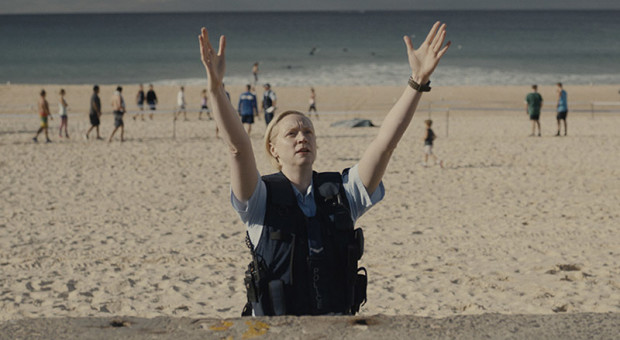
There's a moment in the final episode of this second series of Jane Campion's Top of the Lake where Nicole Kidman's character Julia reminds Elizabeth Moss's character Robin, a policewoman and our protagonist, that she, Julia, is the 'real mother' of Mary (Alice Englert), the troubled and endangered young woman at the centre of the drama. Mary is adopted: Julia raised her, whereas Robin merely gestated her. An argument about exactly what it means to be a mother is not only important in the relationship between Robin and Julia: it is key to the main plot of the drama.

A body has been found washed up on a Sydney beach, and is discovered to be that of a Thai woman working in one of Sydney's legal brothels. The dead woman was pregnant when she died, but the baby is not genetically related to her; episode 2 ends with Robin's realisation that the dead woman was acting as a surrogate. What follows is a story that weaves together the rather murky worlds of the legalised sex trade and commercial surrogacy, which is illegal under New South Wales law.

Hands up if you shouldn't be working this case!
Now, it’s worth interjecting at this stage with the observation that, if there’s one thing we learn from Top of the Lake, it’s that Australian police have some very sloppy procedures and conflict-of-interest regulations. Gwendoline Christie plays Miranda, with whom Robin is partnered in the investigation; Miranda is not only having an affair with her boss, but is also trying to have a baby by surrogacy with him. Worried that the foetus taken from the dead woman might be her own, Miranda has a bit of a barney at the office of the clinic that she patronised (matronised?). This strikes me as the sort of thing that might see a real police officer removed from a case, at the very least; but nothing at all is mentioned about it. Police officers having affairs with each other? I’m sure that happens. Police officers engaging surrogacy services? Likewise. Police officers investigating a case that straddles the boundary between legal and illegal surrogacy, at the behest of a commanding officer with whom they are trying to start a family by means of a legally-iffy surrogacy service? Is there no oversight here? At the same time, via Puss, the none-more-sleazy pimp played by David Dencik who has something to do with the illegal surrogacy racket and with whom Mary is besotted, the story is also very personal for Robin – just as was the story in the first series of Top of the Lake. Again: should she really be working on this case?

Maybe there is method in writer/ director Jane Campion’s plotting. There is a good point to be made about how our attempts to separate the private/ personal and the public/ political can only ever be partial, and that it’s often in women’s lives that we see the intersection most clearly. But there’s also a risk here of Robin becoming a slightly rough-at-the-edges Miss Marple: someone around whom Bad Things keep happening, and with whom you probably wouldn’t want to spend too long in a country house. Whether a third series of TotL would be possible without characters becoming mere ciphers for political points is unclear.

Admittedly, it’s a bit early to worry about the plausibility of a programme that might not ever be made; and the implausibilities of this series (or what one hopes, for the sake of effective policing in Australia, are implausibilities) ought not to detain us too long. For there are deep and troubling questions that the series raises.

11.8.17

Charlie Gard: An Ethical Analysis of a Legal non-Problem

(This is an extended version of a post that originally appeared at EJIL: Talk!)

For those with an internet connection and an interest in current affairs, the story of Charlie Gard been hard to avoid recently. A decent précis is available here; but it’s worth rehearsing.

Shortly after his birth, Charlie’s health began to deteriorate, and he was diagnosed with a terminal and incurable mitochondrial DNA depletion syndrome. By March 2017, Charlie needed artificial ventilation, and doctors at Great Ormond Street Children’s Hospital (GOSH) applied to the High Court for confirmation that removing that ventilation would be lawful, having judged that it was not in his best interests. This was contested by his parents, Chris Gard and Connie Yates; the High Court ruled in favour of GOSH. This was confirmed by the Supreme Court and the European Court of Human Rights. During all this time, Charlie remained ventilated.

In the High Court, Mr Justice Francis said that his decision was subject to revision should new evidence emerge favouring continued treatment; in July, Charlie’s parents returned to the High Court, claiming that Charlie might benefit from an experimental treatment being offered by Professor Michio Hirano of Columbia University. However, as proceedings advanced, it became clear that Hirano’s proposed treatment had never been used on patients like Charlie, that he had neither seen Charlie nor read his notes when he offered the treatment, and that he had a financial interest in that treatment. The position statement issued by GOSH on the 24th July barely hides the hospital’s legal team’s exasperation. On the 24th July, Charlie’s parents dropped their request for continued treatment. The details of Charlie’s palliative care were still disputed; his parents wanted it to be provided at home, with ventilation maintained for a few days. The High Court ruled against this on the 27th July. Charlie was moved to a hospice; his ventilator was removed, and he died on the 28th July, a few days before his first birthday.

The way this case has played out has not been pretty. Elements of the American media (this piece is one among many) and the political right wing used it to launch attacks on single-payer healthcare systems: Nigel Farage weighed in, complaining about the state taking away parental rights: From the left, Giles Fraser wrote that the case was being dealt with too rationally. None of these claims is justified, and many left-leaning people have been surprised to find themselves in agreement with Melanie Phillips on this matter.

Legally, the case was very straightforward.

2.8.16

Free Labour and Quiet Doubts

(Originally posted on 1.viii.16 at the other place.)

Those of us on the academic side of things will almost certainly recognise the situation: you're sitting in your school's Teaching & Learning committee, or a staff/student committee meeting, or something like that, and you hear the complaint from students that they should get more contact time.  Academics should spend more time teaching rather than simply doing their own research.  After all, they're paying however-many thousand pounds for their education.

And you'll've heard the standard rebuttals - and maybe even trotted them out yourself: that course fees cover not just teaching costs, but libraries, labs, buildings and so on; that university learning isn't about hours in a classroom; that teaching and research are intertwined; that students benefit from being taught by the people who're writing the papers they're reading.  But I wonder if these standard responses miss something important.

Back in April, I was getting companionably smashed with some of my final-year students, and we were talking about what they were going to do when they'd graduated, and about possible careers.   One or two were interested in academia, and so a part of the conversation concerned what life's like from my side of the fence.  Predictably, pay was one thing that interested them.  I mentioned that I'd made about £80 in total from the books I've written, spread over 10 years.
"And what do you get paid for a paper?"
I held back my bitter laughter, and explained how much you get paid for papers, and how much you get for peer-reviewing, and all the rest of it.  The students had had no idea that this stuff was expected of us, but not remunerated.  Why would they?  Indeed, isn't it insane that we're not paid?

I think that one gets an insight here into students' complaints about academics' priorities being wrong.   If they think that we get paid for publishing papers, then of course they're going to think that we have an incentive to resist extra contact hours - and everything we tell them about extra contact hours being at best academically unnecessary, and likely as not counterproductive, will sound like so much bad faith.  After all, of course we'd tell them that a course only needs 30 hours of lectures rather than 60 if we could be earning extra money with those spare 30 hours.

What prompts all this is an article in the Chronicle of Higher Education.   It's from 2012, but it's started popping up in my social media timelines this morning, and Carl posted it on Fear and Loathing in Bioethics last night.  It makes a proposal:

22.7.16

Hate Thy Neighbour

Over at the other place, I've written a couple of times over the years in response to posts on the Christian Medical Fellowship's blog.  (Now I look, it's more than a couple.)  I have a strange fascination with it, you see.  But the fact that the other blog is associated with an august academic body means that I have to restrain myself.  I don't think I have to do that here.

First, though, why do I have it on my RSS to begin with?  Well, there's something about the combination of utter bewilderment by the world, the staggering poverty of the reasoning, the ability to misunderstand things that're really quite straightforward, and a compulsion to crowbar a Biblical verse into every second paragraph that I find compelling.  But the fundamentalism does sometimes grate; some of the attitudes there are - to use a word that the contributors there almost certainly think relates to actual historical fact - antediluvian.  And they stop the posts being quite as funny as they might be.

Peter Saunders' latest is a grotesque example of all that's wrong with the CMF.  "We live in times when the very foundations of our civilisation are being destroyed," he begins.
[T]he NHS with its burgeoning needs and shrinking budgets, mounting national debt, political and economic uncertainty following ‘Brexit’, the threat of Islamic fundamentalism, creeping atheism and secular humanism.
See the problem here?  The utter lack of perspective?  Even if you think that these things are bad - on which, more anon - I'd wager that the very foundations of our civilisation are not being destroyed.  At most, they're changing.  Saunders has form when it comes to secularism, though.  It's one of the things he simply doesn't understand.  He's used the phrase "secular fundamentalism" as though it actually exists, for example (in a piece that offers a defence of the pointless genital mutilation of male children, to boot).  He thinks that Britain is "slid[ing] into secularism".  He doesn't seem to notice (a) that secularism is perfectly compatible with Christianity - and arguably draws some of its intellectual strength from the Christian idea that one should render unto Caesar that which is Caesar's, and unto God that which is God's: a doctrine that is quite possibly an early call for a separation between religion and politics; (b) that, as such, a commitment to secularism is precisely the thing that guarantees his right to publish this gibberish irrespective of prevailing religious views; and (c) he is in no way representative of what most Christians think anyway.  (Maybe he's a bit takfiri when the mood takes him.)

But then again, I've thought for a while that there's the whiff of the theocrat about Peter.  I thought I'd written something to that effect elsewhere, though I can't seem to find it right now.

25.5.16

An Addendum on the Strike

Having written at length about why I'm not persuaded that a strike is a good idea when it comes to university pay disputes, I've just learned that Goldsmiths, and maybe a couple of other places, are diverting the money that would have been paid to striking staff to the student hardship fund.

Now that's the sort of thing that might win me over.  Staff would still lose out in the short term - that's part of the nature of a strike - but students would get some kind of benefit that'd begin to offset any inconvenience; and employers wouldn't be rewarded for making staff angry.  (Not all inconvenienced students would benefit, but some would; and a benefit to the student body in abstracto doesn't mean that every student in concreto would have to feel it.  That's probably all that matters.)

If I hear from my employer that there's a comparable scheme at our place, then I think I'd be persuaded.  I'd still probably work, but that's because I've got nothing better to do with my time; but I'd be much more likely to register as being on strike.

To Strike or Not To Strike?

Officially, the UCU is on strike today; the headline is that the dispute comes down to being about pay.  According to the UCU website, the real value of academic salaries has fallen 14.5% since 2009; the latest pay offer is 1.1%.  I'm not sure how the 14.5% figure is calculated, but I'll take the Union at its word.  (I don't doubt that Universities UK would dispute the figure; but even if it's mistaken, there's no reason to suppose that the UCU is speaking in bad faith.)

To be honest, when it comes to pay levels, I'm personally not all that fussed.  Larger pay rises are nicer than small ones, but academics at my level are not poorly paid by any stretch of the imagination.  But it's not about what I get personally.  What's much more worrying is the dual trend of the demands placed on us in return for that pay, and the casualisation of HE.  Everyone I know works evenings and weekends; I've had five days' annual leave in the past two years, and I worked during that; I'm not taking any holiday this year.  The idea that one might take a couple of days away from the keyboard to read and get to grips with a new book, or longer to get up to speed with a new but important topic or sub-field on work time is risible, even though doing so would obviously contribute to teaching and research.  There's no time or incentive to step back and look at how courses work and how the might be done differently.  If you're casual, you can flit between sessional gigs for years - and increasing numbers are casual.  Pay at my end of the scale may not be bad in absolute terms; but if you're starting out, it can be awful.  It isn't always; but it can be.

In many ways, the UK system is beginning to look like the US system, with all the grotesqueness that that entails... except that here (with a very few exceptions), we don't have the Prince-Bishop professoriate.  Senior academics are in pretty much the same boat as a newly-appointed junior lecturer.

We do have our Prince-Bishops, though: Vice-Chancellors' pay has gone up by quite a bit more than academics' - in one case, by about 25%.  (Falmouth has a university.  Who knew?)  The Wolverhampton VC's pay went up by 19.6%, apparently as a reward for exceptional leadership - whatever that may mean - and reflecting the "size, complexity and performance of [the] university" - as though academic staff have nothing to do with that performance.  On that basis, the hypocrisy of the 1.1% offer is stunning.

4.4.16

Why India? Why Brits?

Cross-posted from the other blog.

Julie Bindel had a piece in The Guardian the other day about India's surrogate mothers.  It makes for pretty grim reading.  Even if the surrogates are paid, and are paid more than they might otherwise have earned, there's still a range of problems that the piece makes clear.

For one thing, the background of the surrogates is an important factor.  Bindel writes that
[s]urrogates are paid about £4,500 to rent their wombs at this particular clinic, a huge amount in a country where, in 2012, average monthly earnings stood at $215.
It's tempting, at first glance, to look at the opportunity to be a surrogate as a good thing in this context: these women are earning, by comparative standards, good money.  But, of course, you have to keep in mind that the standard is comparative.  If your choice is between doing something you wouldn't otherwise do and penury, doing the thing you wouldn't otherwise do looks like the better option.  But "better option" doesn't imply "good option".  So there's more to be said there; more questions to be asked.  Choosing x over y because y is more awful doesn't mean that x isn't.  It might be a good thing; but it might not be.  There might be economic - structural - coercion.  Choosing to become a surrogate might be a symptom of there being no better alternative.

A related question is this: are the women really making a free choice in offering their reproductive labour even assuming that the terms are economically just?  Possibly not:
I have heard several stories of women being forced or coerced into surrogacy by husbands or even pimps, and ask Mehta if she is aware of this happening.  “Without the husbands’ [of the surrogates] consent we don’t do surrogacy."
Note (a) the non-denial, and (b) the tacit acceptance that it's the husband's decision anyway.  That's not good.

(In a wholly different context, I've recently been reading David Luban's Lawyers and Justice, and - in a discussion about lawyers cross-examining complainants in rape cases, he makes this point:
([H]ere we have two people who are confronted by powerful institutions from which protection is needed.  The defendant is confronted by the state [that is: in any criminal trial, the defendant does need protection from the power of the state - IB], but the victim is confronted by the millennia-long cultural tradition of patriarchy, which makes the cliché that the victim is on trial true.  From the point of view of classical liberalism, according to which the significant enemy is the state, this cannot matter. But from the point of view of the progressive correction of classical liberalism, any powerful social institution is a threat, including diffuse yet tangible institutions such as patriarchy. (p 151)
(The sentiment would seem to apply here.  A view of human agency that sees liberty as being mainly or only about avoiding state interference is likely to miss all kinds of much more subtle, insidious pressures that are liberty-limiting.  Economic factors are such pressures.  The idea of the wife as property is another.)

I do wonder if readers of this blog might help out with answering one more question, though. One of the startling claims is that
[a]pproximately 12,000 foreigners come to India each year to hire surrogates, many of them from the UK.
I don't know how many "many" is, but let's take as read that it's more than none.  It's a statistic that raises a question for Ophelia Benson over at Butterflies and Wheels:
Why India? Why not hire surrogates at home?
Because India has a lot of poor people, that’s why. Because the price is a fifth of what it would be at home. Because it’s a perfect setup for rich pale people to exploit very poor brown women.
I don't think that that's quite got it.  As I commented on Ophelia's piece, this wouldn’t easily explain the UK factor.  As the article makes clear, commercial surrogacy is illegal here; surrogates are allowed only to recoup reasonable expenses.  Surrogacyuk.org suggests £7000 – £15000 as a guide for the “price” (I know I shouldn't use that word, but you know what I mean) in the UK; but if Indian surrogates are paid £4500, and the clinic is still making up to £18000 on the transaction (assuming I’ve not misread the article), the Indian market is likely to be more expensive for commissioners, even without the cost of travelling to India to begin with.

So why do Brits use Indian surrogates?

Here's a hypothesis.  In the UK, surrogacy arrangements aren’t enforceable, the woman who gives birth is automatically recognised as the mother, and a Parental Order is required for the commissioning mother/ couple to be legally recognised as having parental status.  I don’t know what the legal niceties are in India, but my guess is that that side of things is probably a bit easier to deal with.  After all, if the procedure there is as free-wheeling as Bindel suggests, keeping track of exactly who gave birth to whom and with whose eggs isn’t going to be foolproof.

Is that it?  Is there any other reason why people from the UK might commission an Indian surrogate mother?

5.3.16

Autism, Mental Illness, Euthanasia and the WaPo

(Cross-posted from the other blog.)

There was a piece in the Washington Post the other day with a striking headline: Where the Prescription for Autism can be Death.

Normally, if we're saying that the prescription for x is y, we mean to say that y is being suggested as a treatment for x. Painkillers are the prescription for a bad back, a steroid cream the prescription for eczema, and so on. Even if you find that phrasing a bit clunky, "prescription" implies the recommendation of a medical expert. On that basis, the implication here is that somewhere in the world, doctors are seeing patients, diagnosing autism, and saying, "I wonder if the best thing would be to kill you". That would be Quite a Big Deal.

The place in question is Holland. But a quick look at the article shows - surprise, surprise - nothing of what's hinted at in the headline. Here's the opening few sentences, edited slightly for formatting:
In early childhood, the Dutch psychiatric patient known as 2014-77 suffered neglect and abuse. When he was about 10, doctors diagnosed him with autism. For approximately two decades thereafter, he was in and out of treatment and made repeated suicide attempts. He suffered terribly, doctors later observed, from his inability to form relationships: “He responded to matters in a spontaneous and intense, sometimes even extreme, way. This led to problems.”
A few years ago, 2014-77 asked a psychiatrist to end his life. In the Netherlands, doctors may perform euthanasia — not only for terminal physical illness but also upon the “voluntary and well-considered” request of those suffering “unbearably” from incurable mental conditions.
The doctor declined, citing his belief that the case was treatable, as well as his own moral qualms. But he did transmit the request to colleagues, as Dutch norms require. They treated 2014-77 for one more year, determined his case was, indeed, hopeless and, in due course, administered a fatal dose of drugs. Thus did a man in his 30s whose only diagnosis was autism become one of 110 people to be euthanized for mental disorders in the Netherlands between 2011 and 2014.
So, then, it's a story about a man, who happened to be autistic, and who asked a psychiatrist for euthanasia. After a little to-ing and fro-ing, that request was granted. There is no reason to believe that this was a case of death being prescribed for autism. It's just that he happened to be autistic and to want to die, and a prescription for assistance was provided. Phrasing is important.
Dutch law on assisted dying is famously liberal; in considering the permissibility of euthanasia for psychiatric as well as somatic illnesses, it is in the minority of the minority of jurisdictions that consider the permissibility of any euthanasia. I have addressed the question of psychological suffering in relation to euthanasia elsewhere, and shan't rehearse the details here; suffice it to say, I don't see any reason in particular to think that mental illness and physical illness should be treated all that differently in principle:

3.1.16

New for 2016: Shaming 7-Year-Olds

Salon is running a story about a video that has apparently gone viral.  (I only know about it because of the Salon piece; maybe its virality is self-fulfilling.  Maybe I've just not been paying enough attention to YouTube.  But I digress.)

The video is only a minute or so long, and it shows two little girls receiving the gift of a doll.  I'm not good at guessing people's ages, but I'd guess that they're somewhere around 7 or 8 years old.  The doll happens to be black; the girls are white.  One girl looks as though she's disappointed with the gift, but trying to be diplomatic about it; the other bursts into tears.

"Their reaction shows how much a doll can tell us about race", says the byline.  The article concludes that, "[t]hough obviously not an official social experiment, their reaction is a comment on just how early in life racial bias forms".

Well, it might.

30.11.15

So. Syria, then.

I don't know.

They're going to hold a vote in Parliament about whether to begin air strikes against ISIS targets in Syria.

Everyone seems to have an opinion on this.  Lots of people think that it's a good thing.  Lots of people seem to think that it's a bad thing.

I suppose that I'm expected to have a view in some way.  Workings of democracy, and all that nonsense.  Need to be engaged.  Important to take a stand.

It's hard to take a stand.

I don't know.

Dropping bombs on ISIS will make us de facto allies of President Assad, at least for the short term.  President Assad is deeply unpleasant.  We probably don't want to be allies with him.

BUT...  President Assad is, whatever else he may be, an astute politician.  He wants power, or survival if power's not available; not martyrdom.  He is at least on nodding terms with secularism; he isn't fighting a holy war.  His war is one of politics.  That makes him, at least on paper, the kind of person with whom negotiations are possible, and who will be concerned about when the game's up.

Maybe we should offer him a secure and peaceful retirement in London.  "When this is over, Bashar, just fuck off from Damascus, eh?  We'll make sure you're personally fine.  That's a price worth paying.  Just go quietly.  Good chap.  London suit you?  Geneva?  Moscow?  Tehran?  Your choice.  Just never go back to Syria.  Deal?"

ISIS are not, as far as I can see, in the slightest bit concerned about when the games up.  They'll think that surviving is a victory.  They'll think that being killed is a victory.

Assad might well be much the better of two evils.

The gratuitous sadism, and the cultural vandalism of ISIS are plenty of evidence for that to be the case.

So.

I don't know if dropping bombs on ISIS will work.  I'm inclined to think that it won't.

I don't know if refraining from dropping bombs on ISIS will work.  I'm inclined to think that it won't.

The kicker: I don't know what "working" would be anyway.

I can't be the only one who doesn't know this stuff.

There's a lot of coverage in the news who are certain one way or the other.

There's not so much of those who genuinely have no idea.  I think that there's a lot of us, though.

I don't even know if the certain people should be less certain.

I don't know where to begin.

23.11.15

Review: Carl Schneider and Censorship

The Censor’s Hand: The Misregulation of Human-Subject Research
Carl E Schneider
The MIT Press

(NB: I was commissioned to review this book for Pacific Standard in September; what's published here is the first draft, from early October.  After some suggestions from the editor, I submitted a revised second draft a couple of days later.  Neither draft has been published there yet, and I've no idea if and when that will change.  If anything does appear there, I'll provide a link.)

Not so long ago, Stephen Pinker provoked the ire of many bioethicists by appearing to launch an attack on institutional ethical review boards (IRBs).  Accusing them of hindering important work in science, he wrote that they should “get out of the way”.  Bioethicists responded by pointing out that there is a history of researchers behaving abominably – the go-to example in recent years being the Tuskegee syphilis study, in which black men were deliberately left untreated so that the natural course of the disease could be studied.  Ethical review, the bioethicists’ response goes, will not guarantee that nothing bad will ever happen; but it does reduce the chance.

Yet Pinker’s broad claim is not without support from within the bioethics community.  Thoughtful commentators have been looking at the institutional review board system for some while now, and arguing that it needs significant reform.  Could it be, some have wondered, that “bioethics” has become an end in itself, claiming an authority with which even many bioethicists are uncomfortable?  And if, then, there is a decent case for reform, how far should it go?  Some think that the system needs re-tuning; some think that it needs something approaching a rebuild.  And some think that a rebuild is too conservative: that the system is, and cannot but be, so broken that the only option is to get rid of it all together.  In this camp, we find Carl Schneider.  The Censor’s Hand aims to present the case not against IRBs as they are, but against IRBs tout court.